Anima
An AI companion for community college students, built around one objective: graduation. The challenge was specifying what the product says next with the same rigour as a component library.
- Services
- Concept, Conversation architecture, Design system, Handoff
- Year
- 2026

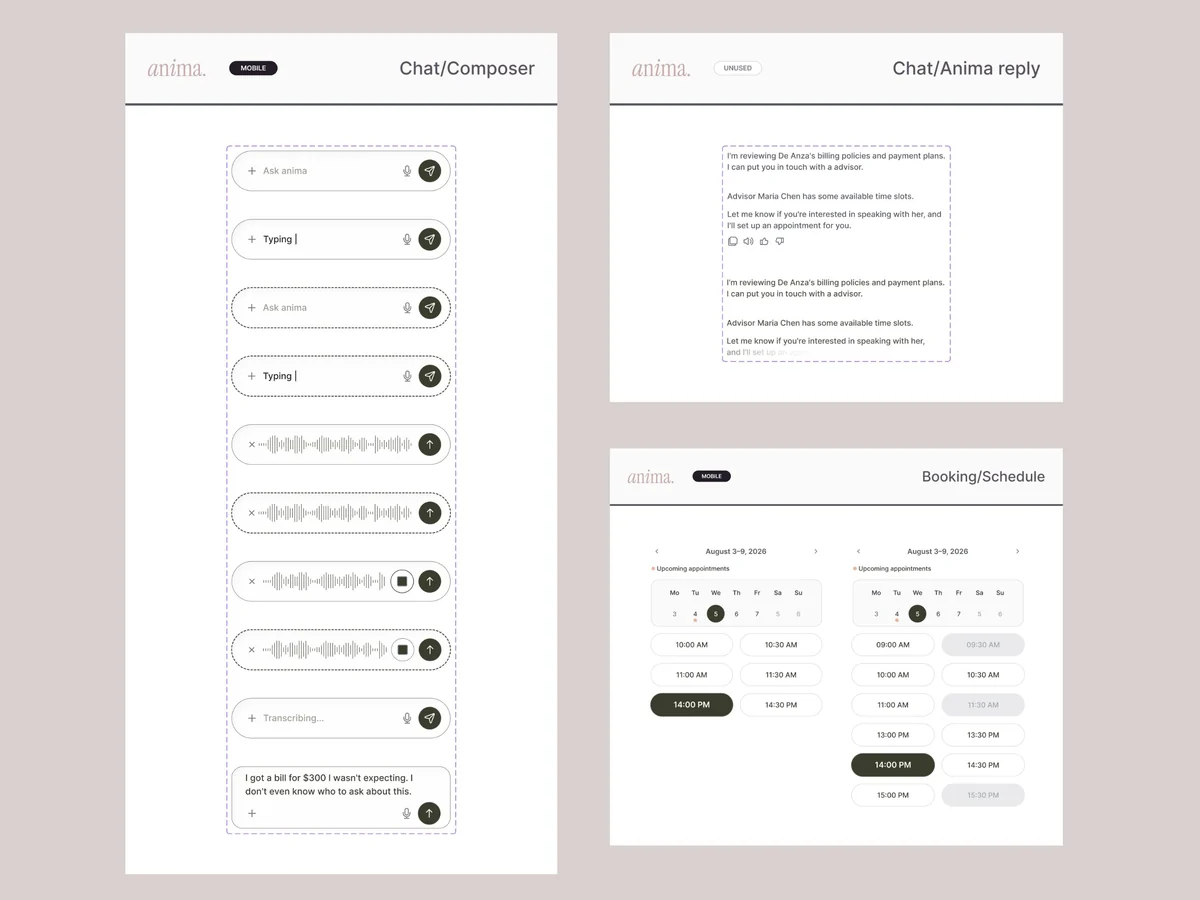
A message-part contract.
Engineering built against a contract specifying every element that can appear in the conversation as a typed component: consent confirmations, referral confirmations, announcement styling, the check-in slider, resource cards, system notices. The application could be built functional-first and skinned when the system landed. On a conversational product, this document is the deliverable engineering depends on most.
The interface is a conversation.
That removes most of what a conventional design system governs and introduces a different problem: the product is constituted by what it says next, and that has to be specified with the same rigour as a component library. The system was therefore built in two parts. One governs surfaces. The other governs conversational moves.
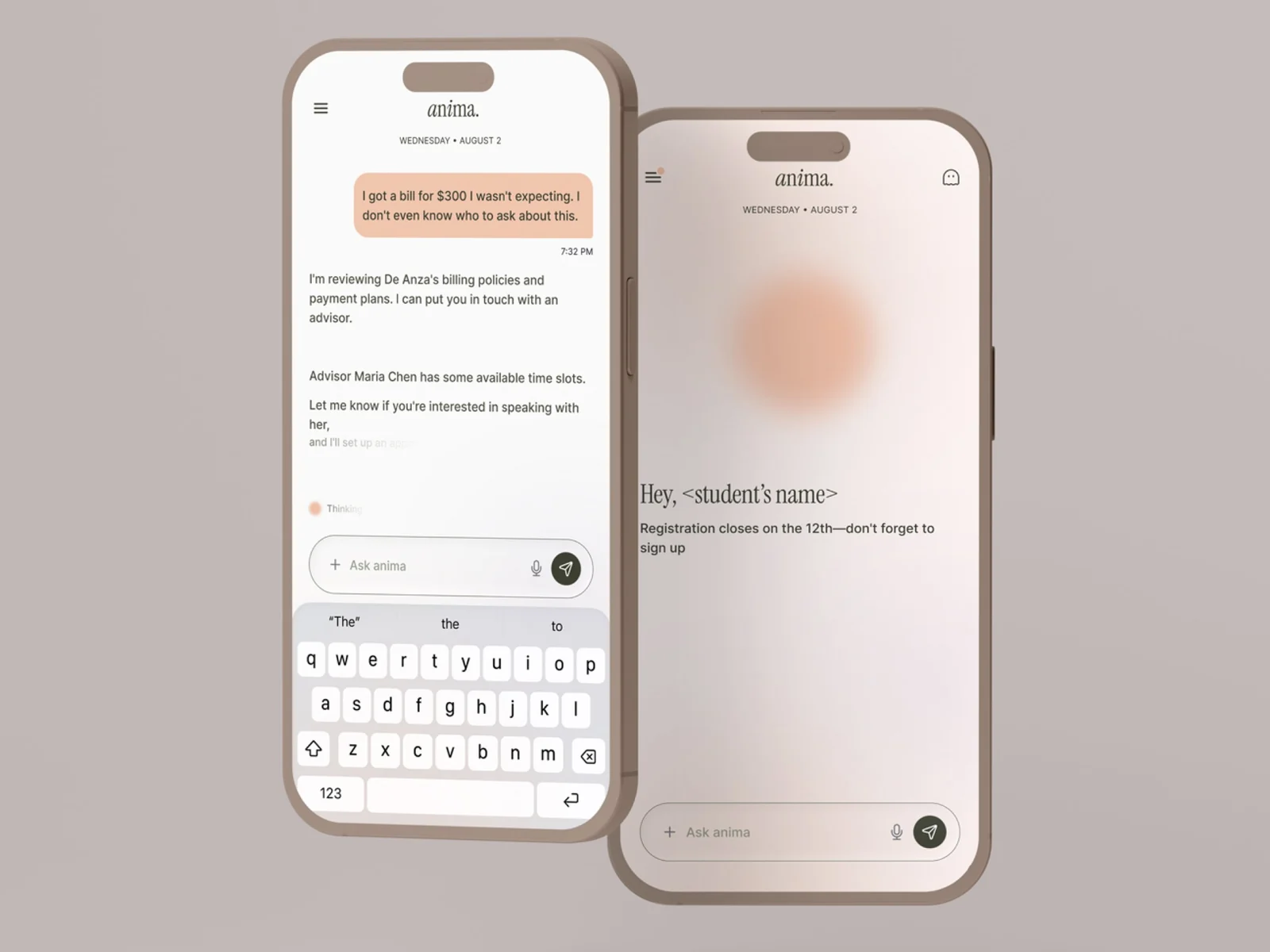
Twelve stages
A given conversation uses a subset. The stages function as components selected according to the situation, and the documentation states this explicitly, because the alternative reading, a twelve-step sequence, produces a worse product.
Open
Start the conversation.
Understand
Understand what the student means.
Reflect back
When a misreading would change the help.
Explore
One relevant layer.
Determine
The current need.
Respond
With the smallest useful move.
Observe
What changed.
Hand off
To a human.
Next step
Create one manageable next step.
Match
A resource.
Close the loop
Follow through on what was started.
Retain
Decide what to retain.
Three governing decisions
Consent, evidence and silence.
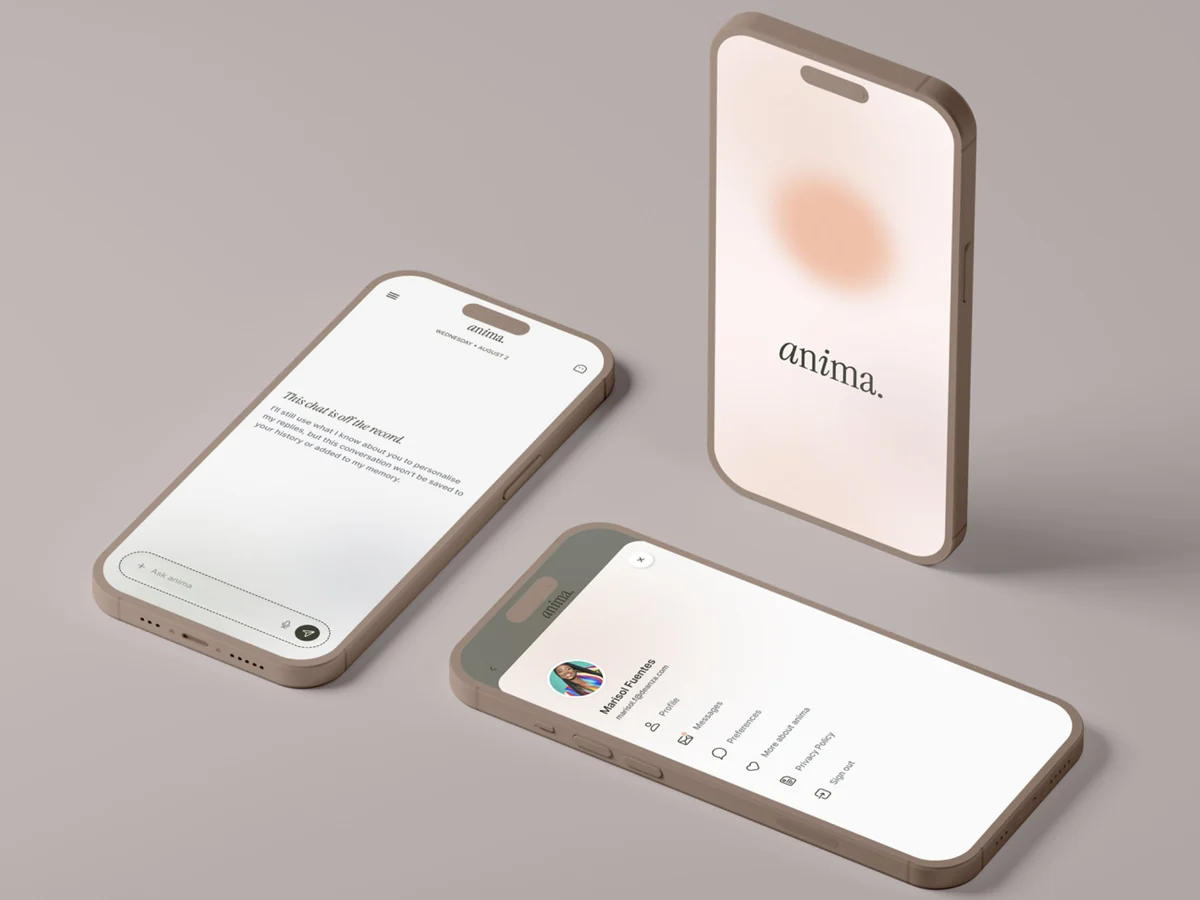
Consent as interface
No information reaches a staff member without an explicit confirmation inside the app.
Review before confirming
The student reviews and edits the exact summary before confirming.
Most design attention
The consent screen received more design attention than any other screen in the product.
An explicit non-answer
Where the knowledge graph has no basis for a response, the product says so.
Source, date and limits
Every answer carries them.
Trust and compliance
This works as a trust mechanism as well as a compliance requirement.
Disengagement as a signal
A student who stops responding generates no message for a model to interpret.
Rule-based detection
A separate rule-based mechanism operates on engagement events.
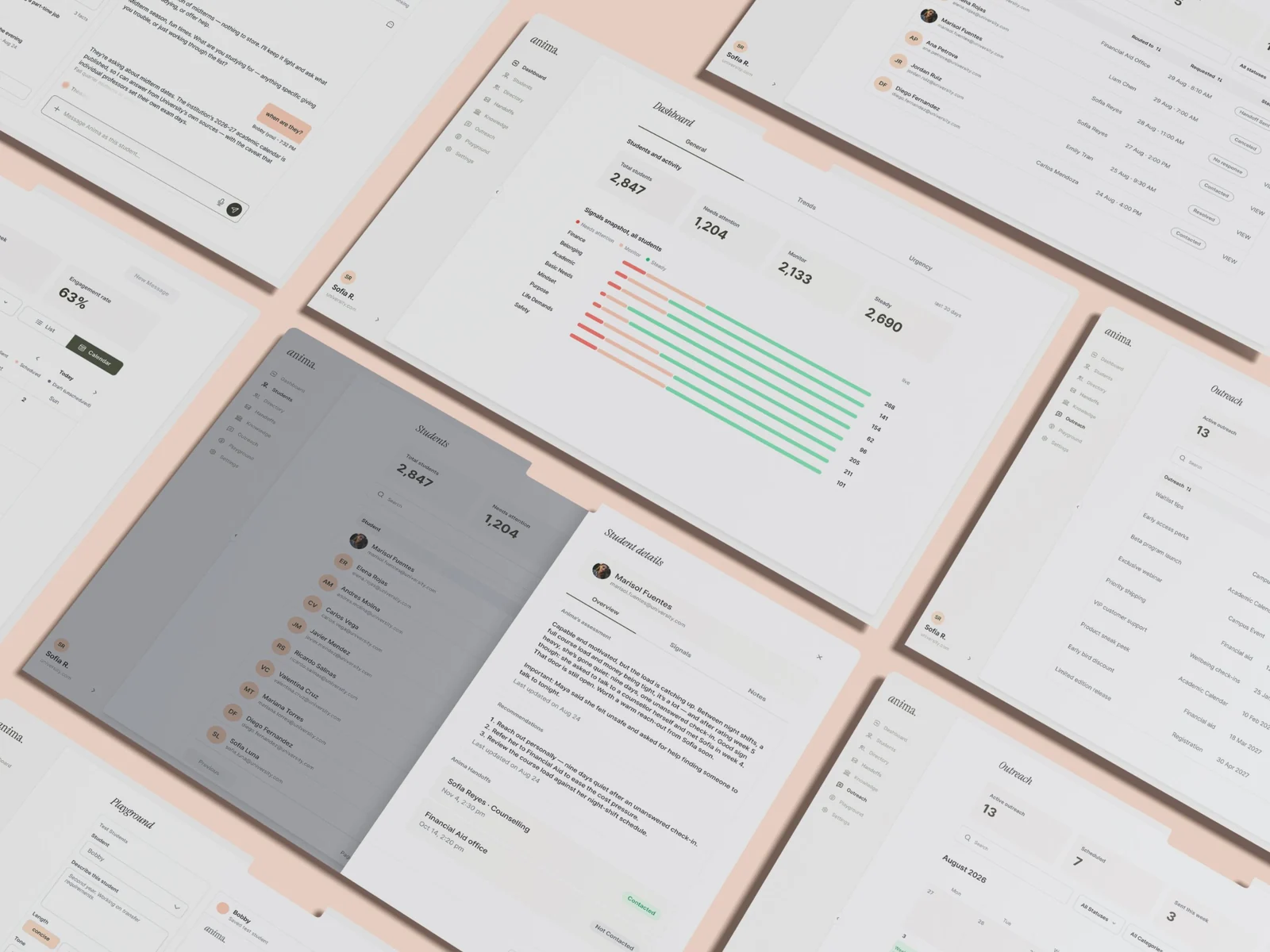
A campus at dusk
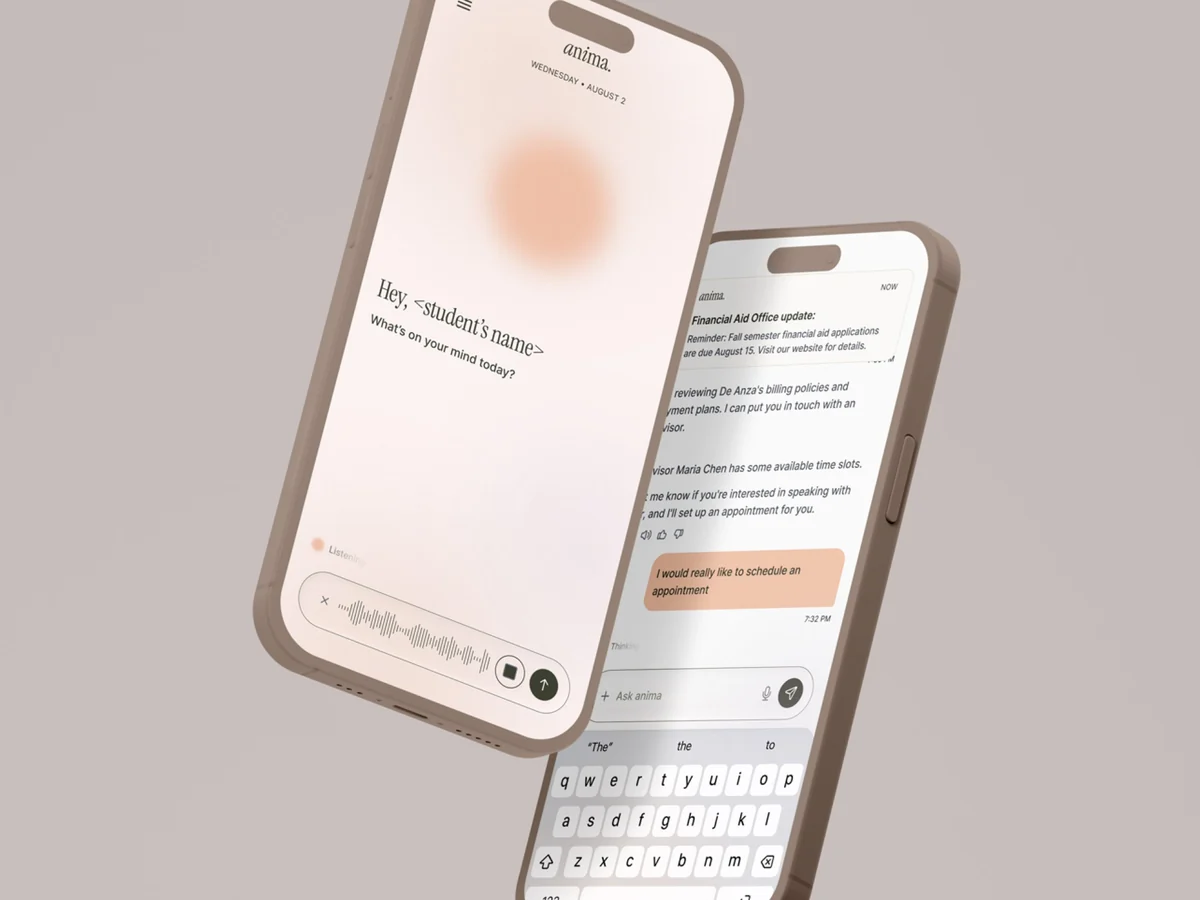
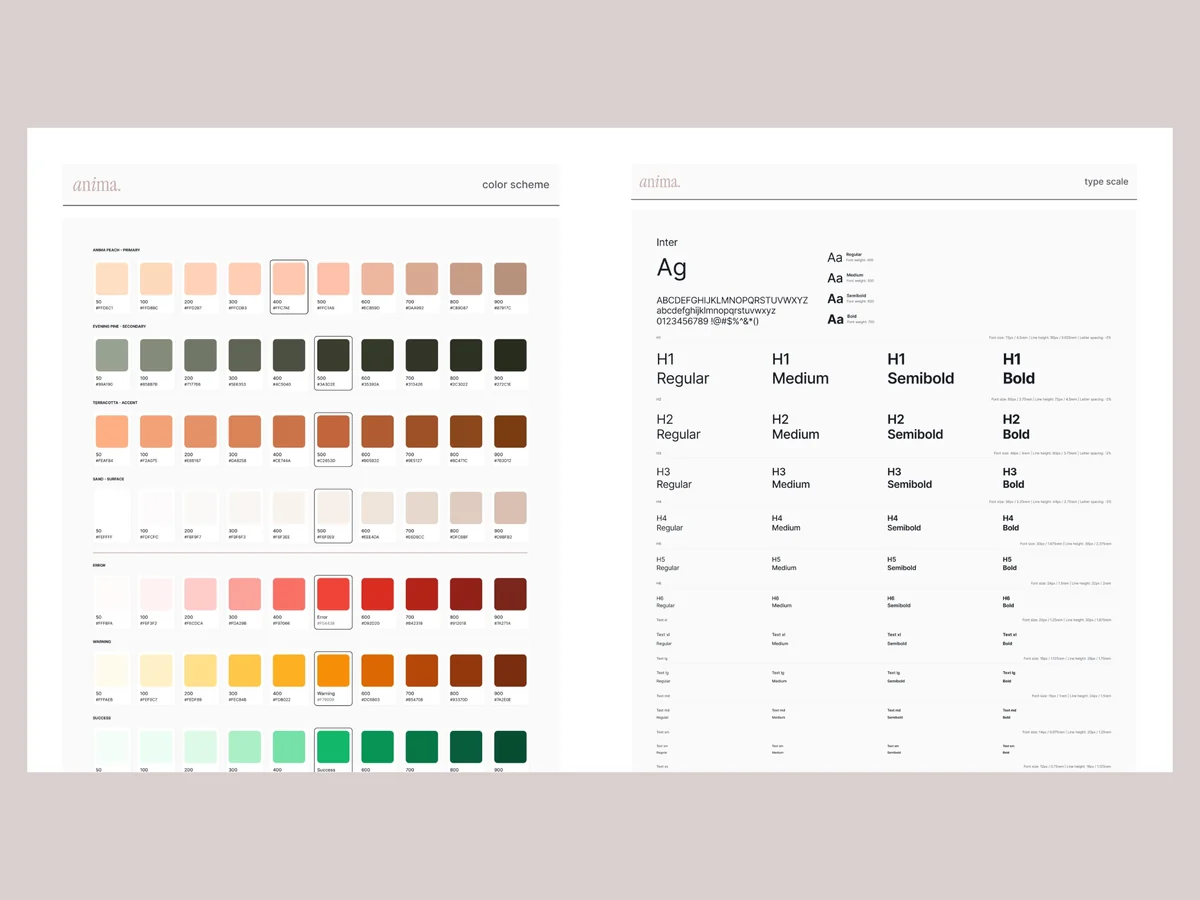
The product is used by people at low confidence, and a clinical interface compounds that. The design system was built from first principles through delivery: palette, type scale, the resting and working states of the orb, the conversation loop, the check-in slider, voice input and the consent screen.
The system in numbers
Conversation architecture and accessibility.
- 12
- Conversation stages, used as components.
- 6
- Modes that route the conversation once the need is identified.
- AA
- WCAG 2.1, verified with VoiceOver and TalkBack prior to store submission.
A conversation decomposes into components.
Treating it that way separates a prompt that performs in testing from a product another team can extend. The screens requiring the most design attention were the ones with the least content on them.