Norlu
A collection game for local exploration: discover a Wonder, validate it on arrival, collect it into an explorer profile. The challenge was serving travellers, destinations and local businesses at once, where a decision that improves the experience for one can degrade it for another.
- Services
- UX/UI consulting, Audit, Discovery, Redesign
- Year
- 2026

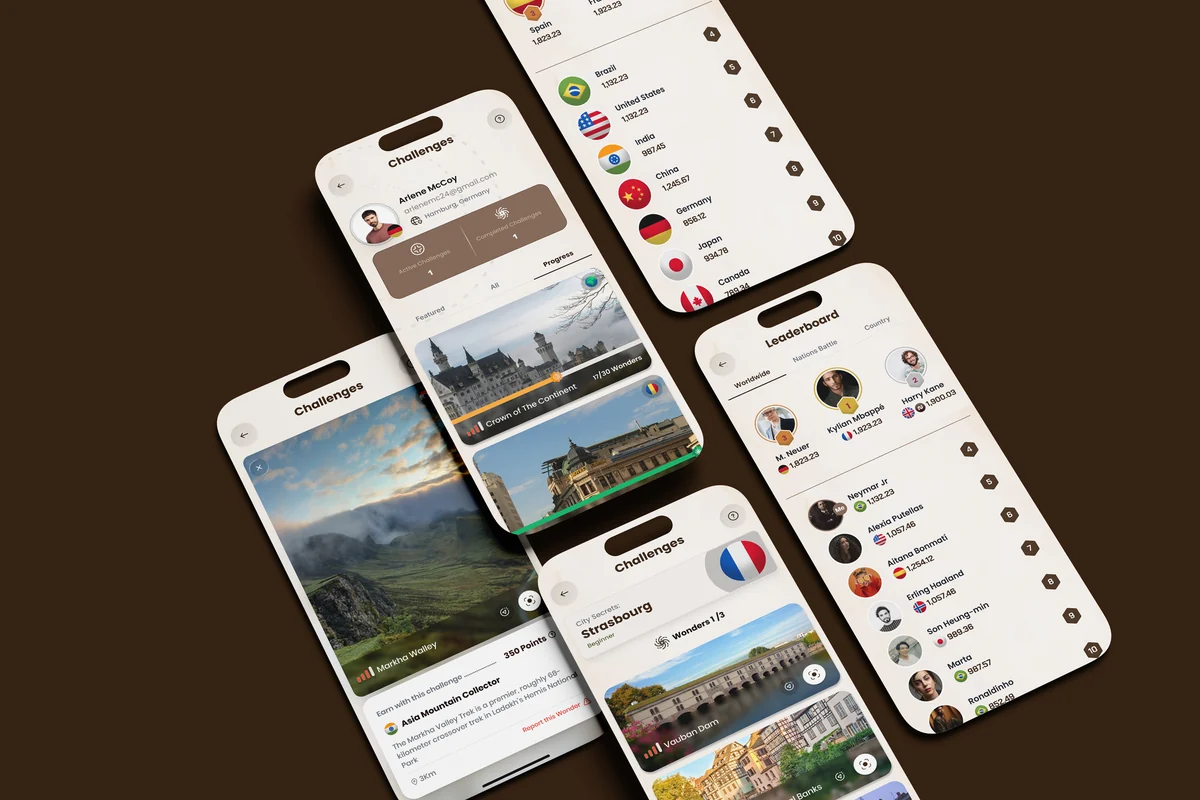
I ran discovery sessions with the client.
The product needed flows for features that had not been built yet. The sessions established what those features had to do before deciding what they would look like, and the flows and interfaces were derived from those requirements. On a small team without a dedicated product function, this put product direction inside the design scope.
80% of tourists visit 10% of places.
The product’s own framing of the problem. Travellers want places that are not already full. Destinations want visitor flows redistributed and anonymised data on where people actually go. Local businesses want qualified foot traffic. A design decision that improves the experience for one of the three can easily degrade it for another.
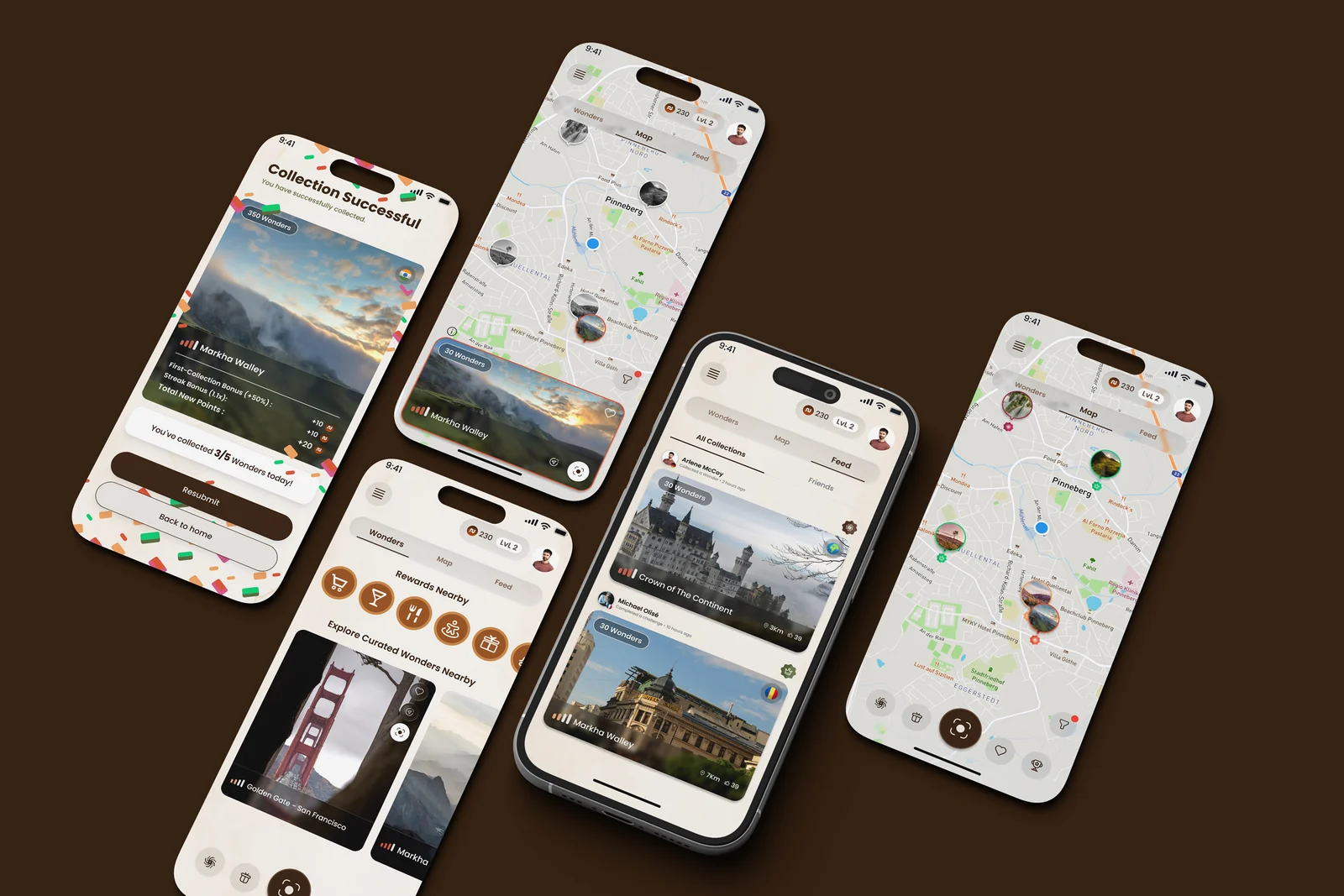
Principal findings
Ranked by impact, which is what allowed the client to act on them under a fixed budget.
Gaps in the experience
Sequences that left the user without an obvious next action, most often after a point capture: the moment the product has the user’s attention and the least excuse for silence.
Unnecessary flows
Steps that existed without changing the outcome. In a product used while walking, each one is paid for twice: once in time and once in attention the user does not have.
Visual inconsistency
The same element appeared in different forms across screens, because there was no system beneath the interface. The component library delivered in phase two exists to fix this.
Heuristic failures
Standard usability violations across feedback, error prevention and recognition over recall.
The map and the camera are the product.
New interfaces, navigation restructured around the map and the camera, and a component and style library delivered with editable source files. The library carries the longest value horizon: a small team shipping quickly without a component system reproduces the same element repeatedly and accumulates variants, and a documented library reduces the marginal cost of each subsequent screen.
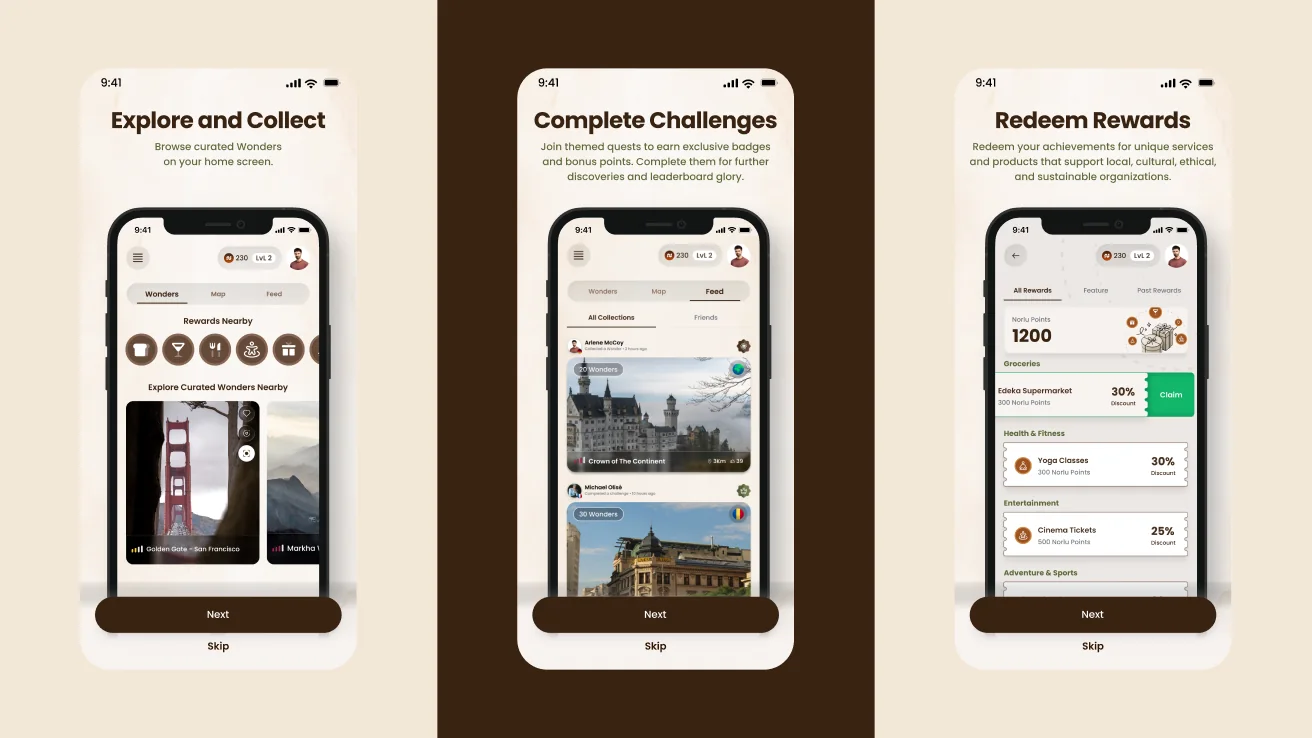
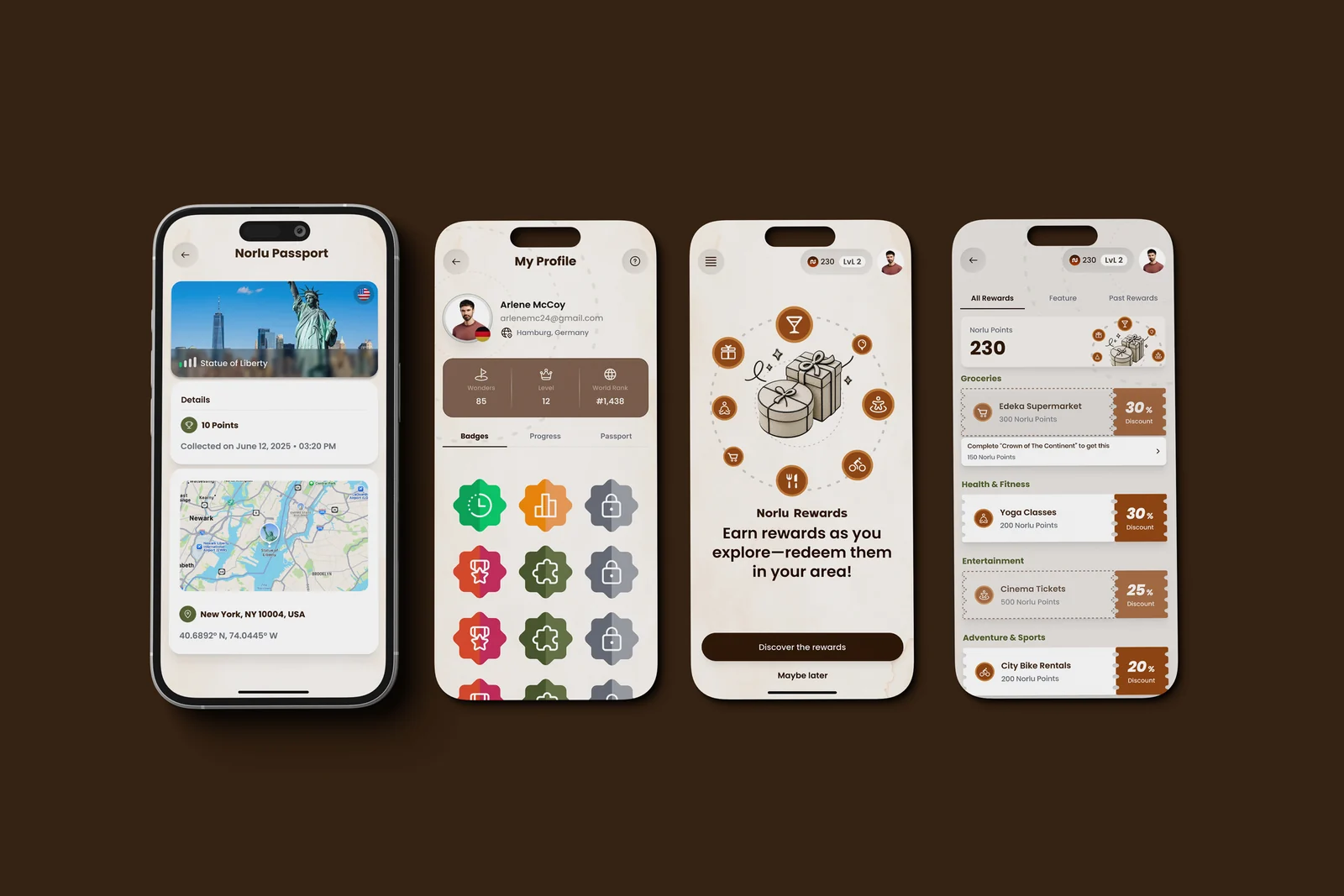
Two constraints that shaped the interface
Privacy and connectivity, in a product used outdoors.
Privacy
Privacy is a product position. Location is validated only at the moment of an active check-in.
No tracking
No continuous background tracking, no stored movement history, no personal data sold.
Aggregated data
What reaches tourism authorities is aggregated and anonymised.
Legible at check-in
In a product whose core action is proving physical presence, the privacy position had to be legible in the interface, where a policy page would bury it.
Offline
The map and the collection work without signal.
Where it matters
The places worth finding are frequently the places with the worst reception, so a design that assumes connectivity fails precisely where the product is most valuable.
Conditions of use
Offline runs alongside the touch-target findings.
Outdoors, one-handed
Bright light, often while walking.
And no signal
The fourth condition the interface has to hold under.
Outcome
Version 1.0 shipped on 5 May 2026. The redesign shipped as 2.0.
- 2.0
- Released 11 September 2026, described in Apple’s release notes as a completely redesigned experience with major interface and navigation improvements.
- iOS · Android
- Live on both platforms.
- EN · FR
- Available in English and French.
Features from discovery, release by release.
Interactive onboarding and proximity alerts in 1.2. Leaderboards and in-app Wonder submission in 1.3. Submission tracking in 1.3.1. The activity feed and in-app issue reporting in 2.0.