Wieldy
A B2B SaaS for dental insurance billing, with an AI layer for the questions practices ask every day. The challenge was designing across three regulated domains without the interface becoming confidently incorrect where an error has a financial cost.
- Services
- Product design, AI UX, Immersion through handoff
- Year
- 2023
- Problem
- Insurance billing takes practices hours every month, and every claim depends on what each insurer accepts.
- What I did
- Immersion in the domain through the founders, then the full product from registration to reporting. The AI layer came after version one, with answers constrained by rules.
- Result
- Practices spend far less time on billing work, by Wieldy’s own figures.
- Role and team
- Sole designer, hired directly, working with the founder, a product manager and the developers. More than six months.
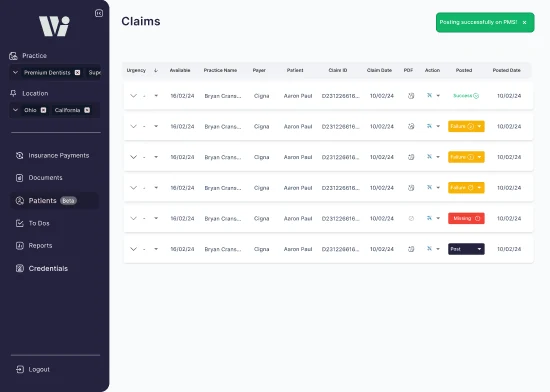
Reporting is a primary surface.
Practice owners evaluate a billing tool by how quickly it answers questions about outstanding revenue. In B2B the operator and the purchaser are frequently different people, and the purchaser evaluates the product through the reporting screens.
Three domains, one interface.
Wieldy operates at the intersection of dental practice operations, insurance claims processing and applied AI. Each domain carries its own vocabulary, regulatory surface and failure modes.
A complete product
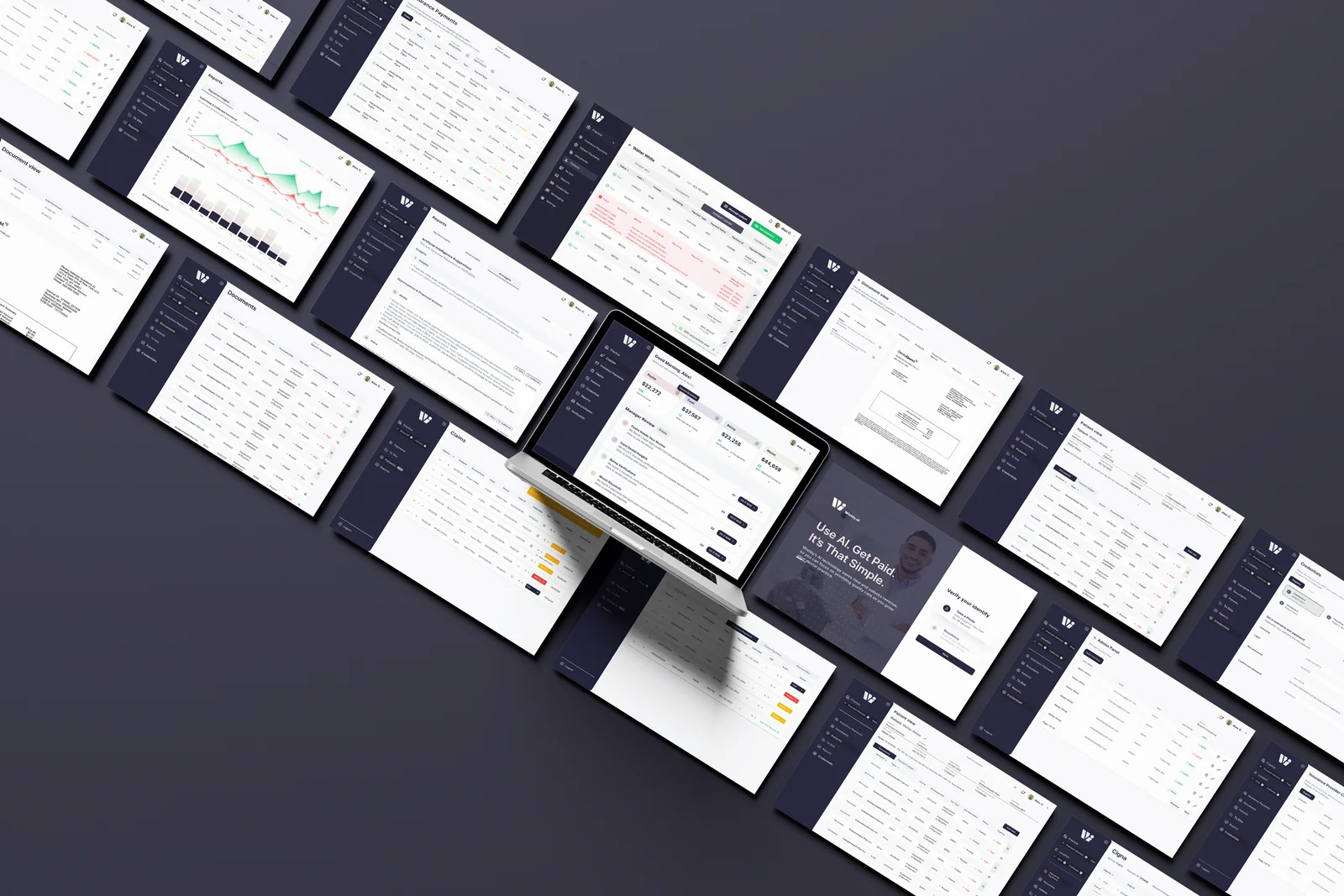
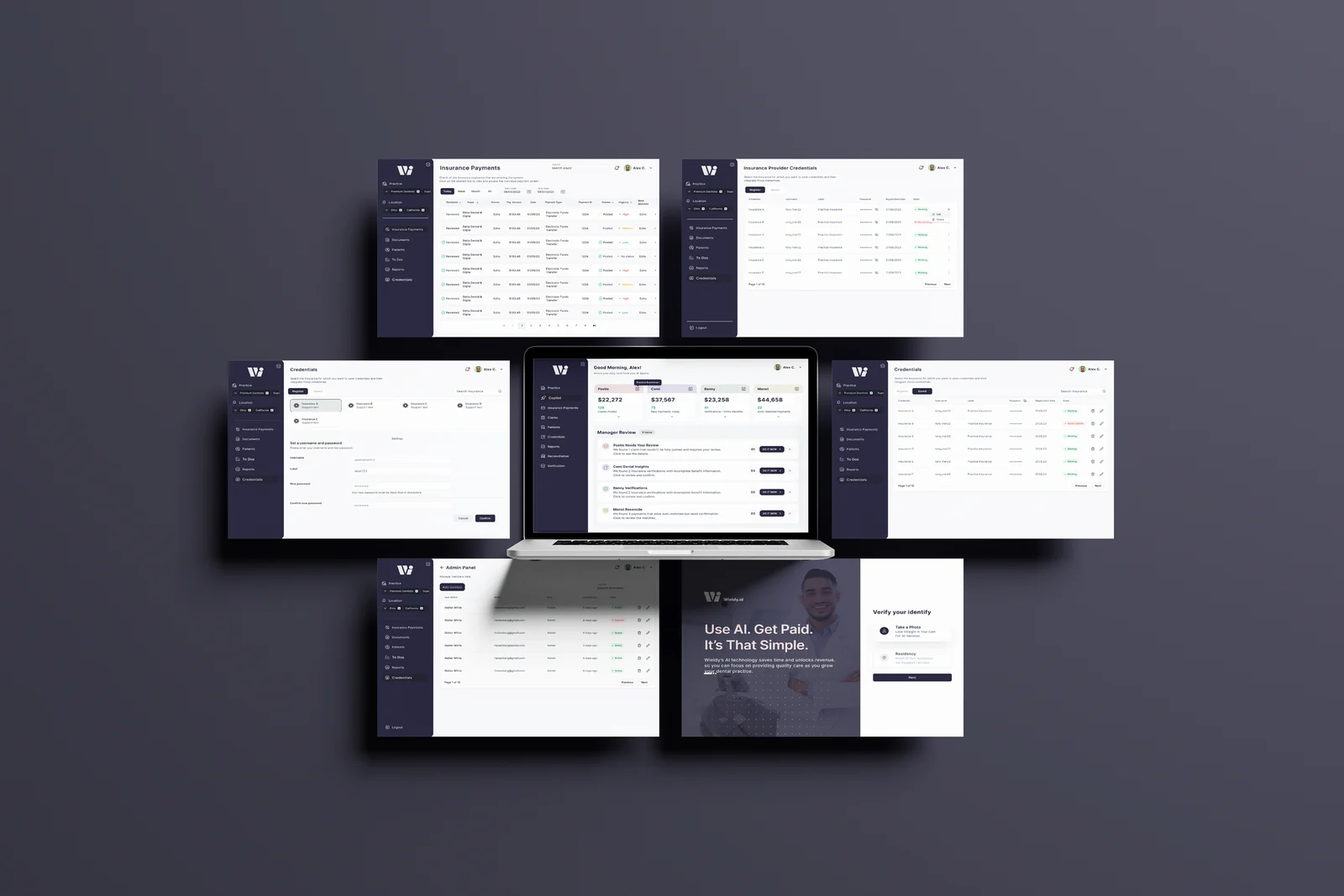
From registration to the AI layer, designed as one system.
Registration and onboarding
Sign-up, identity verification and a guided first run.
Patient records
The people each claim is built on.
Insurer records
What each insurer accepts, and in what format.
Invoices and submission
Invoice construction and submission to insurance companies.
Reporting
How much revenue is outstanding, and where.
AI layer
Answers to the recurring questions practices ask.
Version one had no AI.
The first release covered the billing flows alone. The AI layer arrived later, with the improvements that followed, so the core flows had to work on their own before the product answered any question.
An AI answer carries the weight of a validation rule.
The recurring questions occur at decision points where the user is uncertain whether a submission is correct. An AI response in that position sets a higher accuracy requirement than conversational features usually carry. Answers are constrained by rules, and the domain knowledge behind those rules came through the founders.
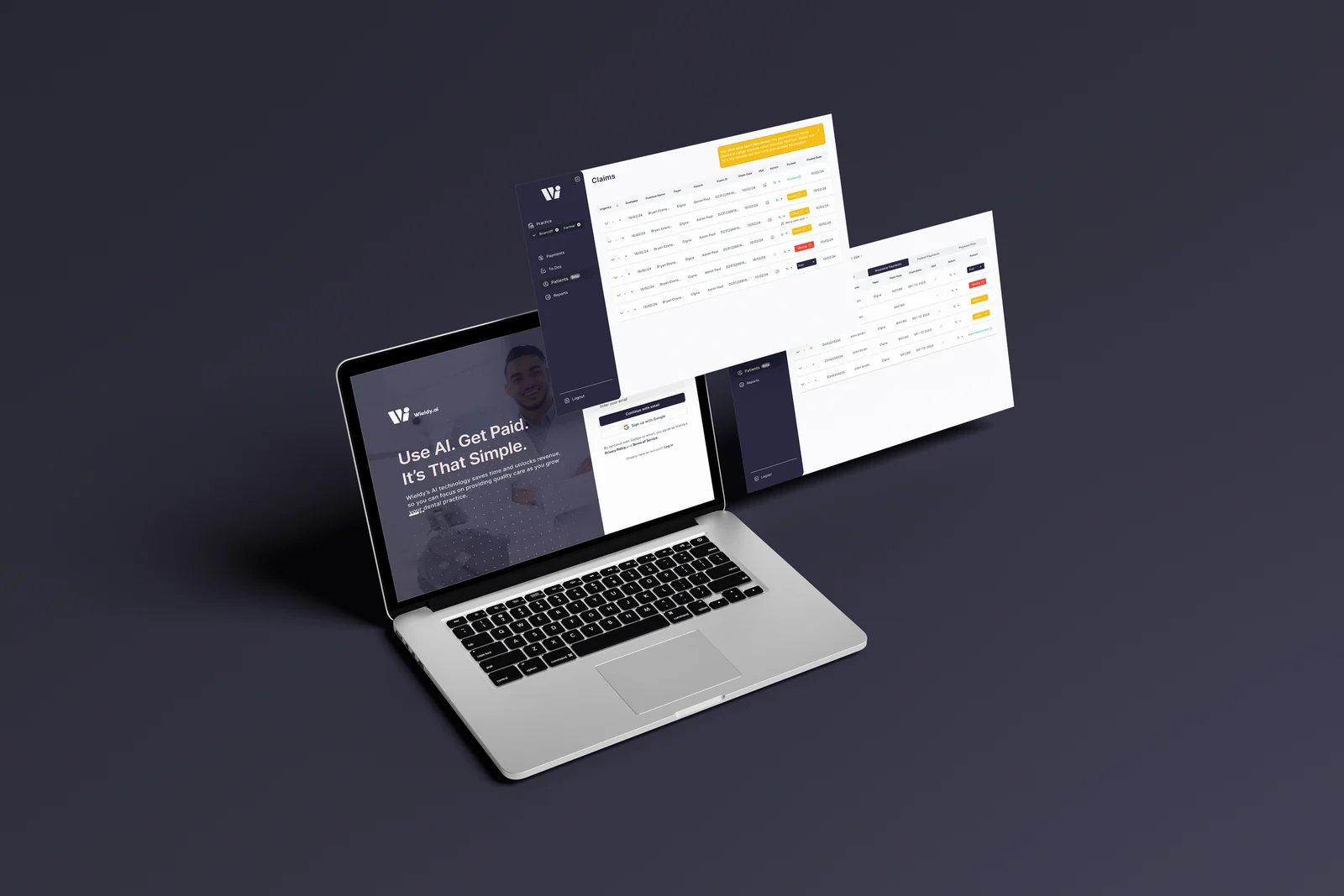
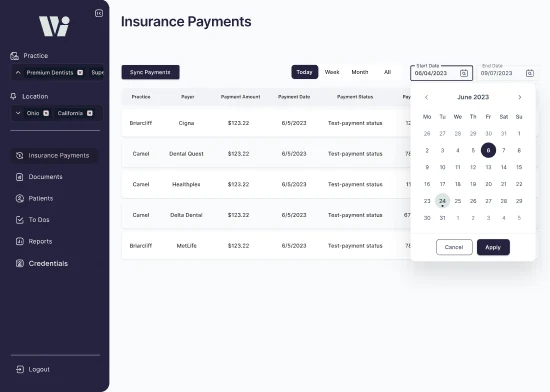
The difficult elements were the rules.
Domain risk translates directly into design risk, and immersion ahead of interface work was the only viable sequence.
Results
The hours figure is published by Wieldy.
- 80+
- Hours saved per month on insurance posting, denial management and EFT payment reconciliation.